Kitchen Drawers vs Cupboards: Which Is Better?
October 15, 2026


Choosing between kitchen drawers and cupboards affects how easily everyday items can be found, reached and stored. For homeowners planning kitchen renovations in Central Coast, Central Coast Kitchens & Bathrooms can help identify a practical combination that suits the kitchen layout, household needs and available budget.
Drawers often suit frequently used cookware and utensils, while cupboards remain useful for tall items, overhead storage and areas around plumbing. Planning cabinetry around the items being stored helps create an organised, accessible kitchen without adding unnecessary cost.
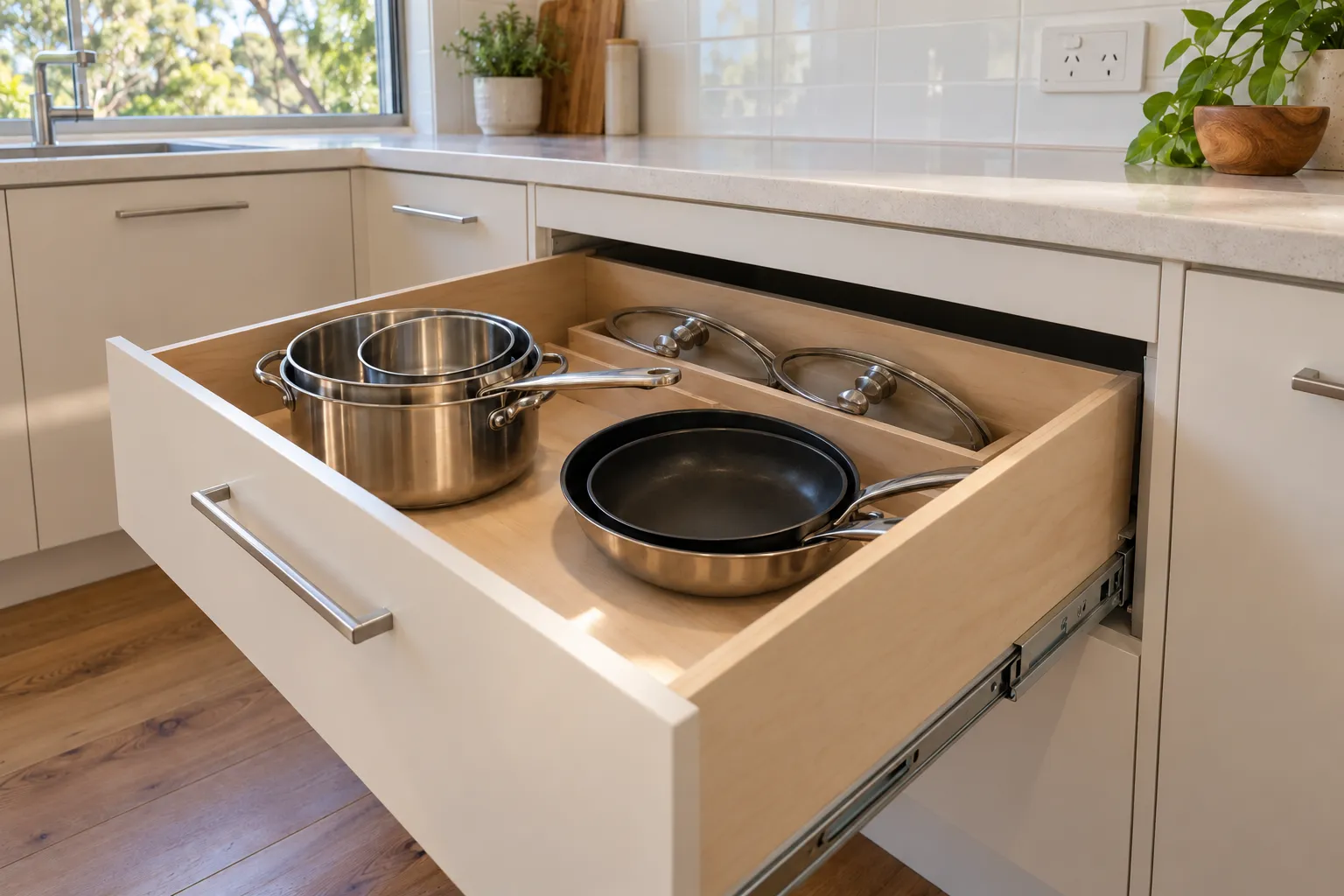
Storage capacity and ease of access are closely related, but they are not the same. A cupboard may hold a substantial amount, yet items at the back can be difficult to reach. Drawers bring their contents forward, making storage easier to use, although their boxes and hardware occupy some of the cabinet’s internal space.
Full-extension drawers allow access to the back of the drawer box. This can make deep base cabinets more practical, particularly for cookware, food containers and everyday crockery.
However, drawers do not automatically provide more storage volume than an equivalent cupboard. Internal width, drawer depth, side height and the space required for runners all affect capacity. A bank of shallow drawers may also be unsuitable for items that need uninterrupted vertical space.
Cupboards with adjustable shelves offer flexibility for taller appliances, large stockpots and bulk containers. Their main limitation is often access rather than capacity, especially when smaller items are stored behind larger ones.
Drawer inserts and dividers help separate items and prevent them from shifting. Shallow drawers suit cutlery and utensils, medium drawers can hold containers and mixing bowls, and deeper drawers can accommodate cookware where the dimensions and load rating are suitable.
Cupboards can also be organised effectively. Vertical racks suit baking trays and chopping boards, while shelf risers and baskets can improve visibility. Accessories should match the items being stored rather than fill the cabinet with compartments that restrict flexibility.
Corner cupboards require particular attention. Carousels and pull-out trays can make rear items easier to reach, but their mechanisms and movement clearances take up space. They should be assessed for access, load capacity and usable storage rather than assumed to maximise volume.
Exploring different kitchen storage solutions can help homeowners choose organisers and fittings that suit their cabinetry and everyday routines.
Drawers generally suit frequently used pots, pans, plates, bowls and food containers. Cupboards remain useful for tall or oversized items, overhead storage and less frequently used equipment.
The most suitable option depends on the actual dimensions of each item. A large appliance may fit comfortably in a cupboard but be too tall for a drawer, even when the drawer’s weight rating is adequate.
For many everyday tasks, base drawers are easier to access than deep shelved cupboards. Their contents move towards the user, reducing the need to reach into the back of the cabinet. The benefit depends on drawer height, extension, loading and the needs of the person using the kitchen.
Full-extension runners improve visibility by bringing the rear of the drawer box beyond the cabinet front. Partial-extension drawers leave some of the contents inside the cabinet, so the distinction matters when comparing hardware.
Drawers can reduce awkward reaching, but low drawers may still require bending. Lifting a heavy pot from the lowest drawer can also be uncomfortable. Frequently used or heavier items should be placed at a height that suits the household wherever the layout allows.
Accessibility planning should consider reach, grip strength, mobility and the weight of stored items. A wide drawer filled with cookware may be harder to operate than a smaller, lightly loaded drawer, even with suitable runners. Following accessible design principles can help create a kitchen that accommodates changing household needs over time.
Comfortable handles and smooth drawer movement can improve usability. Soft-close mechanisms control the closing action, but they do not make a drawer lighter or guarantee that it will be easy for every user to open.
Overhead cupboards suit items that can be reached and lifted safely. Heavy appliances and cookware are usually better stored lower down. Pull-down fittings may improve access to upper storage, provided their operating effort and load limits suit the user.
Drawer runners should be selected for the drawer dimensions and intended load. Soft-close operation, full extension and load capacity are separate specifications. An undermount runner is not automatically stronger than a side-mount runner.
The cabinetmaker should confirm the manufacturer’s load rating and whether it includes the drawer’s own weight. Drawer construction, cabinet fixings and installation quality also affect performance.
Cupboard shelves require appropriate support for their contents. Door hinges generally support the doors, while internal pull-out systems have their own load limits and mounting requirements. Some internal pull-outs also require the cupboard doors to open fully before they can extend.
Drawer banks usually cost more than standard door-and-shelf cupboards because they contain additional components and require more assembly and adjustment. The difference varies with cabinet dimensions, materials, hardware and accessories, so comparable quotes are more useful than a general percentage estimate.
A drawer unit typically includes several drawer boxes, fronts, runner sets and fixings. A basic cupboard generally needs fewer moving components, although premium hinges and specialised internal fittings can increase its cost.
The comparison should be between equivalent cabinet sizes, finishes and installation scopes. Comparing a premium drawer bank with a basic cupboard does not show the cost difference between otherwise similar options.
When comparing renovation quotes, homeowners should provide each contractor with the same specifications and check that materials, fittings and installation work are clearly listed.
Hardware specifications influence cost, particularly where wider or deeper drawers require a higher load rating. Finishes, front styles and custom dimensions can also affect the price of both drawers and cupboards.
Internal accessories should be priced separately where possible. Cutlery inserts, peg systems, pull-out baskets and corner mechanisms can add substantial cost, and not every cabinet needs them.
Cupboards fitted with multiple internal drawers or specialised pull-outs may lose some of their initial price advantage. Quotes should identify what is included so storage options can be compared fairly.
Drawers often provide the most practical benefit in areas used repeatedly throughout the day, such as utensil storage beside preparation benches and cookware storage near the cooking zone.
Where the budget is limited, selected drawer banks can be combined with simpler cupboards elsewhere. Spending should follow the household’s storage priorities rather than assuming drawers are necessary throughout the kitchen.
Storage works best when it follows the tasks performed nearby. The cooking, preparation, cleaning and pantry zones each have different requirements, and cabinetry should account for appliances, services and available opening space.
Shallow drawers near preparation benches suit utensils, knives in suitable inserts and other frequently used tools. Deeper drawers nearby can hold bowls, containers and appropriately sized small appliances.
Cookware drawers are useful beside the cooktop or beneath it where the appliance installation permits. Drawers below a cooktop must comply with the manufacturer’s clearance and ventilation requirements. Appliance depth and service connections may also limit the available storage space.
Drawers near the dishwasher can make cutlery and crockery easier to put away. Dividers or suitable holders help secure the contents, particularly where plates or glasses are stored.
Under-sink cupboards often accommodate plumbing, bins and cleaning products more simply than standard drawer banks. Specialised drawers can work in some layouts, but they need to be designed around the services and access requirements.
Tall cupboards suit pantry goods, larger appliances and items needing vertical clearance. Brooms, mops and cleaning products should have separate storage from food, with restricted access to hazardous products where children are present.
Overhead cupboards can hold lighter items within comfortable reach. Shelf and cabinet load limits still apply, and heavier items should not be placed high simply because space is available.
A practical layout may combine utensil drawers at the preparation bench, cookware drawers near the cooktop, a cupboard beneath the sink and tall pantry storage nearby.
Island drawers can provide convenient storage where there is enough room to open them. Their position should be checked against stools, nearby appliances and the paths people use through the kitchen.

The right combination starts with a storage inventory and a realistic assessment of how the kitchen is used. Cabinet fronts can then be designed around those requirements.
Map the main work zones and identify the items needed in each area. Cookware should be convenient to the cooking zone, preparation tools close to the working bench, and everyday crockery easy to access and put away.
Check both drawer extension and cupboard door swing. Open drawers project into aisles, while doors may interfere with nearby cabinets or appliances. Narrow layouts require careful consideration of opening clearances and whether nearby storage or appliances can be used together.
Measure tall and bulky items before cabinet dimensions are finalised. Drawer depth, internal height and runner capacity should suit the intended contents, while cupboard shelves should provide adequate clearance and support.
Consider how often each item is used. Everyday equipment deserves convenient access, while occasional serving ware can occupy less accessible storage where it can still be retrieved safely.
Avoiding common kitchen storage mistakes can help keep everyday items accessible and prevent clutter from building up on benchtops.
Prioritise drawers where they offer the greatest daily benefit, then use cupboards where they suit the contents and help manage cost. Compare quotes with the same finishes and clearly specified hardware.
Both drawers and cupboards can suit contemporary or traditional kitchen styles. Front profiles, handles, materials and alignment often influence the appearance more than the storage type alone.
Before final approval, review the layout with the cabinetmaker and check reach heights, loaded drawer operation, appliance clearances and future storage needs. This helps ensure the design works for the household as well as fitting the room.
The best kitchen storage combines drawers and cupboards according to how the space is used. Drawers offer convenient access to everyday cookware and utensils, while cupboards accommodate taller items, overhead storage and areas around plumbing. Considering item dimensions, hardware ratings, accessibility and budget helps create a layout that works comfortably for the household. Central Coast Kitchens & Bathrooms can help homeowners bring these considerations together in a practical, well-organised kitchen.