Kitchen Storage Mistakes That Create Clutter
April 21, 2026


A cluttered kitchen rarely comes down to a lack of space. More often, it is the result of small everyday storage mistakes that gradually steal bench space, fill sink areas and swallow the pantry. In many homes undergoing kitchen renovations in Central Coast, this pattern becomes clear once layouts are reviewed and daily habits are considered. The good news is that once these problem areas are recognised, the chaos can be reshaped into a kitchen that feels open, efficient and genuinely enjoyable to use.
Central Coast Kitchens & Bathrooms explores the most common storage missteps that create mess and frustration in kitchens. It highlights how poorly planned drawers, awkward corner cabinets, overcrowded benchtops and underused vertical space all contribute to clutter. It also looks at the impact of mismatched containers, shallow shelving and expanding “junk” zones. By understanding where layout and habits work against the space, smarter decisions can be made about what to adjust, how to store everyday items and where to invest in better cabinetry or hardware. The result is a kitchen that supports cooking and entertaining while maintaining a calm, uncluttered appearance.
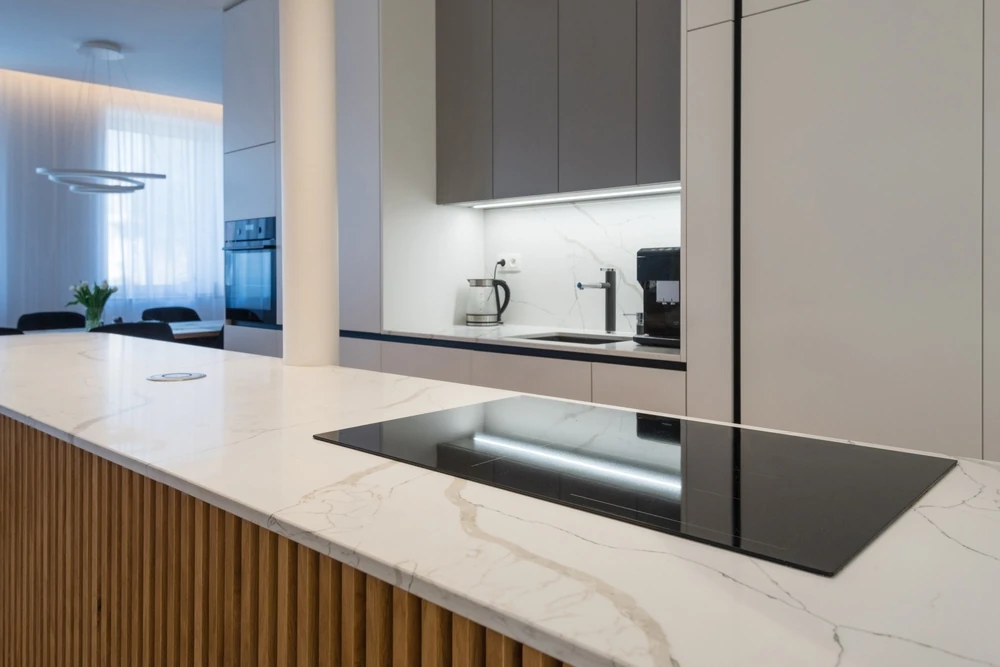
A kitchen can be filled with cupboards, drawers and a generous pantry yet still feel messy and overwhelming. The issue is often not the amount of storage but how it is designed, arranged and used day to day. When storage does not match the way the space is actually lived in, clutter naturally spills onto benchtops and open surfaces.
Understanding why clutter builds up despite ample storage is the first step to planning a kitchen that looks clear and functions smoothly. Several recurring design and organisation mistakes tend to create this problem.
Many kitchens have impressive cabinet counts but the wrong mix and placement of storage. If frequently used items are stored too high, too low or too far from where they are needed, they rarely get put away properly.
Pots and pans kept in a deep cupboard without pull-out hardware usually end up stacked on the cooktop because reaching the back of the cabinet is awkward. Every day, plates stored in a high overhead cupboard often migrate to the dish rack or benchtop because putting them away feels like a chore. When the bin is across the room from the main prep zone, scraps gather on the benchtop instead of going straight into the rubbish.
Storage needs to be positioned around real cooking habits. Preparation tools near the main chopping area, oils and spices near the cooktop, mugs near the kettle and breakfast items near the fridge. Without this zoning, clutter becomes the path of least resistance.
Another reason a well-fitted kitchen still feels chaotic is the lack of structure inside the storage itself. Large voids behind closed doors quickly become black holes that invite overstuffing.
Deep drawers without dividers cause utensils to tangle, so only the top layer gets used while the rest is forgotten. Tall pantry shelves without pull-out baskets make it hard to see what is at the back, leading to duplicates, outdated food and crowded fronts. Corner cupboards without carousels or pull-out systems often become dumping grounds for rarely used items.
When everything has a defined place, items are easier to return, which reduces visual mess.
Open shelving, glass front cabinets and generous benchtops can create the illusion of more storage, although they often contribute to clutter if not managed carefully. Open shelves filled with mismatched mugs, half-used appliances and random decor pull the eye in too many directions and make the whole kitchen feel busy.
Similarly, appliances that could be stored in an appliance garage or dedicated cupboard often live permanently on the benchtop. Toasters, air fryers, slow cookers and mixers quickly consume preparation space, leaving no clear area to work, reading as visual clutter even when everything is technically “in its place”.
Regular editing is essential. Duplicated gadgets, heavily chipped crockery and rarely used speciality items should be culled or relocated to less accessible storage. What remains on show needs to be intentionally chosen so the kitchen feels calm rather than crowded.
The most common cause of cluttered kitchens is storage that ignores how the space is actually used each day. When items are stored wherever there is room instead of where they are needed, benches fill with appliances, cooking zones become congested and cupboards turn into catch-alls that never stay organised.
Effective kitchen storage begins with tasks, not with cupboards. Cooking, making lunches, brewing coffee and unloading groceries all involve repeated movements. If storage is not arranged to support those routines, the result is constant backtracking across the room and items left out on the benchtop “just for convenience".
Everyday kitchen tasks naturally fall into zones such as food preparation, cooking, cleaning and serving. Storage should be mapped to these zones so that everything used together is stored together.
Near the cooktop, pans, cooking utensils, oils and common spices should be within arm’s reach. If pots are in a corner cupboard across the room, they will end up stacked on the stove or benchtop instead. Similarly, knives, chopping boards and mixing bowls belong close to the main preparation bench so that basic cooking does not require walking between opposite walls.
A practical approach is to stand in each zone and list what is used daily. Then ensure there is a drawer, pull‑out or shelf in that immediate area for those items. Less frequently used pieces, such as special‑occasion platters, can move to higher or more distant storage so prime space is reserved for daily tasks.
Morning and evening routines are often when clutter appears fastest. If school lunch containers are stored in a high overhead cabinet and wraps are in the pantry on the other side of the room, the benchtop becomes a staging area piled with half-emptied drawers.
Creating mini task stations helps prevent this. For example, a “breakfast station” might group bowls, cereal, spreads, the toaster and mugs in one section near the fridge. A “coffee station” could place cups, coffee beans, a kettle or machine and teaspoons together so the rest of the kitchen stays clear during the morning rush.
The same thinking applies to unpacking groceries. If pantry shelves for everyday dry goods sit close to where bags are placed after shopping, the process is faster and items do not linger on benches. Bins and recycling should be near the prep area so scraps go straight into the right place rather than collecting on cutting boards.
Even with good zoning, many kitchens still feel cluttered because the storage format does not match the task. Deep cupboards that hide stacks of containers or small appliances encourage people to leave frequently used items on the bench.
Drawers with dividers for utensils, pull‑out pantries for staples and slide‑out shelves for mixers or food processors make it easy to access what is needed, then put it away again. Everyday glassware and plates sit best at mid-height in cabinets near the dishwasher so loading and unloading require minimal movement.
Many kitchens appear to have generous cabinet space yet still feel cluttered and frustrating to use. The problem usually is not the total volume of storage but how that space is divided and accessed. Poorly planned interiors turn large cupboards into deep, dark voids where items disappear and everyday cooking becomes a hassle.
Instead of assuming more cabinet space will solve clutter, the focus needs to shift to how that space functions: what goes where, how easily it can be reached and how well the interior matches the way the kitchen is actually used.
Deep base cabinets and high overhead cupboards look impressive but often lead to wasted and chaotic space. Items are pushed to the back, forgotten and then duplicated because they are too hard to see or reach. Storing heavy pots or appliances at the back of a deep cupboard also increases the risk of strain or accidental drops.
Overhead cabinets that reach the ceiling can be particularly impractical if access is difficult. Without the right internal fittings, the top shelves end up holding rarely used items or become a dumping ground for mismatched containers and appliances. A visually spacious kitchen can still feel cramped if every cabinet requires bending, stretching or unpacking half the contents to reach a single item.
Cabinets that are hard to organise are often simply in the wrong configuration for daily routines. For example, a tall pantry with only three or four wide shelves might technically hold a lot, yet it forces multiple categories of food to occupy the same surface, so order quickly breaks down. Splitting this into a mix of pull-out wire baskets, narrower shelves and a vertical section for trays or chopping boards creates clear homes for each type of item.
Similarly, storing heavy pots and pans in a deep cupboard below the cooktop is common but inefficient. Converting this space to full-extension drawers with dividers for lids and frying pans turns a cluttered cavity into a tidy one-motion access zone. Everyday crockery is more practical in waist-height drawers than in overhead cupboards, reducing lifting and chipping and keeping benchtops clearer.
Attention to interior layout is just as important as the cabinet fronts. When shelves, drawers and inserts are planned to suit specific items and habits, the same kitchen footprint suddenly feels larger and far easier to keep uncluttered.
Poorly planned pantry and appliance storage quickly turns a new kitchen into a cluttered and frustrating space. When there is no clear home for food staples, benchtop appliances and bulk items, they end up stacked on counters or crammed into random cupboards. Effective storage for these high-use items must be mapped out at the design stage rather than left to chance.
Many kitchens also need to cope with family-sized shops, school lunches and small appliances used daily. Without storage tailored to these habits, the room feels crowded and disorganised, even if the cabinetry is visually appealing.
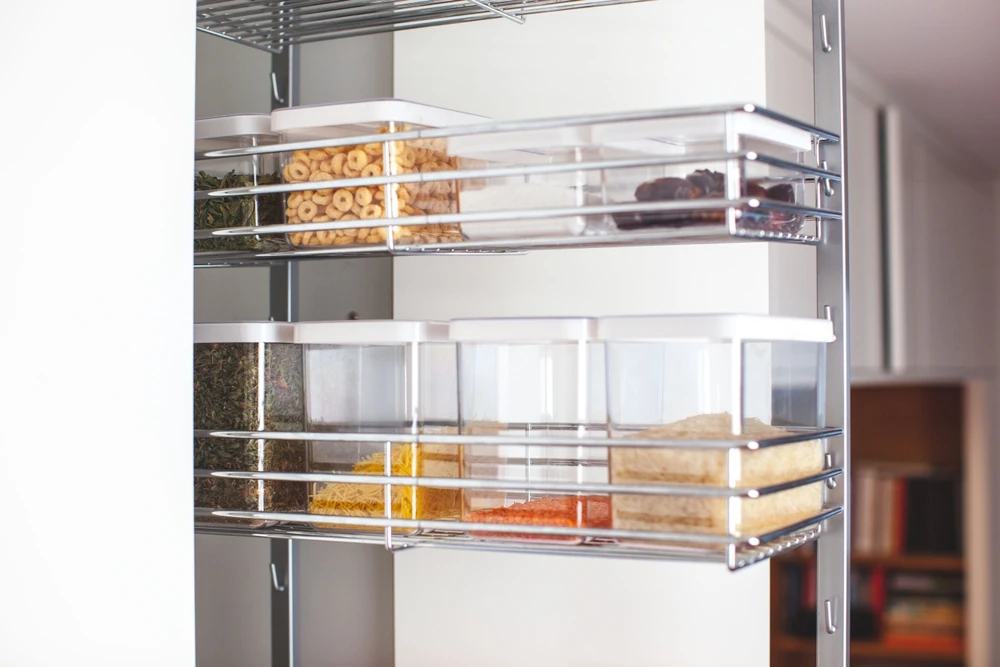
A pantry should be designed around what is actually stored and how often it is accessed. The most common mistake is including a tall pantry cupboard with deep fixed shelves that look generous but hide food at the back until it expires.
Shallow or pull-out shelving works better for most households. Pull-out pantry units, internal drawers behind pantry doors and wire baskets let items be seen at a glance. Everyday foods such as cereals, snacks and baking essentials should sit between waist and eye level so they are within comfortable reach without bending or stretching.
Heavy and bulky items like bottles, oils and appliances belong on lower shelves to reduce the risk of drops. The very top shelves should be reserved for rarely used items such as seasonal servingware or bulk paper goods, so the most used food is always accessible without a step stool.
Lighting is often overlooked in pantry design. Poorly lit spaces encourage clutter because items are simply pushed in wherever there is a dark gap. A simple LED strip or sensor light inside a walk-in or tall pantry makes organisation much easier.
Benchtop appliances are a major source of visual clutter when not considered properly in the layout. It is common to plan only for the cooktop, oven and fridge and then forget frequent-use appliances like the kettle, toaster, air fryer or mixer.
The most effective approach is to list the appliances used weekly and then allocate dedicated homes for each. For most kitchens, this means:
Power access must be planned with storage. Without enough well-placed power points, appliances drift across the benchtop to wherever they can be plugged in, creating constant clutter.
Many households buy in bulk or entertain regularly. A pantry that only fits a small weekly shop forces overflow into random cupboards. Designing in some “buffer” capacity prevents this. Extra wide drawers for snacks and lunchbox items, space for bulk paper towels and a shelf sized for large containers or pet food help keep the rest of the kitchen clear.
Planning pantry and appliance storage around real shopping, cooking and entertaining habits creates a kitchen that stays tidy with far less effort.
When benchtops become the default landing spot for mail, appliances, school notes and pantry overflow, a kitchen instantly feels cluttered and difficult to use. Bench space is valuable working real estate, yet in many homes it functions more as a storage surface than a preparation area.
Cluttered benchtops are usually a symptom of poor storage planning rather than untidiness. Understanding why items end up on display and how to create dedicated homes for them is essential to keeping work surfaces clear and functional.
Benchtops are the most accessible surface in the kitchen, so anything without a proper storage spot tends to land there. Common culprits include rarely used appliances, utensils that do not fit in drawers, oversized platters and pantry overflow like cereal boxes or snack packs.
Open-plan living also encourages everyday life to spill into the kitchen. Keys, phones, school notes and mail drift across from entry zones and dining tables when there is no defined drop zone. Without clear boundaries and tailored storage solutions, benchtops slowly become a permanent display shelf instead of a practical workspace.
Non-kitchen items also need to be considered. A narrow drawer or small cabinet near the entry point to the kitchen can be fitted out as a household hub with dividers for keys, wallets and chargers, plus a slim file or pinboard for paperwork. This prevents daily essentials from scattering across the benchtop.
Charging stations integrated into a drawer or concealed nook keep devices off the working surface while still accessible. A single attractive tray or bowl may be used as a controlled catch-all on the bench, but anything that does not fit it signals the need for a tidy-up rather than another pile forming.
Better kitchen storage planning starts long before any cabinets are ordered. It begins with a clear understanding of what needs to be stored, how often it is used and who uses it. Thoughtful planning turns every cupboard, drawer and shelf into a purposeful zone that supports daily cooking instead of creating clutter.
Instead of relying on generic cabinet sizes or filling walls for the sake of it, effective storage design looks at volume, access and workflow. The result is a kitchen where items have logical homes, benchtops stay clear and movement between the fridge, sink and cooktop remains smooth.
Frequently used items sit closest to where they are needed. For example, chopping boards, knives and mixing bowls belong in the prep zone between the fridge and the sink. Pots, pans, oils and utensils sit on either side of the cooktop. Plates, glasses and cutlery stay close to the dishwasher to simplify unloading. Seasonal or rarely used appliances shift to higher or harder-to-reach areas, so prime space is not wasted.
Planning starts with a list of what is used every day, every week and only occasionally. Measurements of tall items like cereal boxes, bottles of oil or stand mixers prevent awkward gaps or shelves that are too low. This simple audit guides cabinet types and internal fittings so storage serves actual habits rather than a generic idea of a kitchen.
Better storage is less about more cupboards and more about choosing the right combination of drawers, pull-outs and shelves. Deep drawers under benchtops are ideal for stacks of plates, bowls, plastic containers and pots because contents can be seen from above rather than hidden behind other items. Full-extension runners allow access to the very back so nothing gets lost.
In narrow spaces, pull-out pantries or spice racks prevent wasted gaps and keep small items visible. Corner areas perform far better with rotating carousels, pull-out corner systems or angled shelves than with a dark blind cupboard. Inside tall pantry cabinets, a mix of adjustable shelving, inner drawers and pull-out baskets makes it easier to separate baking supplies, snacks and bulk goods.
Appliances and bench space must be considered together with storage. A well-planned kitchen allows everyday appliances to live in designated spots so they do not clog work surfaces. Appliance cupboards and slide-out shelves for heavy mixers or a breakfast station with pocket doors keep toasters, kettles and coffee machines accessible yet visually tidy.
Tall appliances like fridges or wall ovens are framed by nearby storage that supports how they are used. For example, shallow pull-outs besides the fridge for snacks and condiments or drawers under a wall oven for trays and ovenware. Overhead cabinets are kept proportionate so benchtops remain usable rather than cramped.
Effective kitchen storage is less about increasing space and more about using existing space with intention. Common issues all contribute to ongoing clutter. Addressing various factors transforms the kitchen from a catch-all area into a structured and functional environment. When each item has a clearly defined place aligned with daily use, tasks become more efficient, cleaning becomes easier and the space feels more open and cohesive. For homes, this approach also supports long-term value and usability, with thoughtful cabinetry, well-planned internal fittings and a considered layout working together to maintain order well beyond the initial redesign.