Best Bathroom Materials and Design Ideas for Coastal Homes
March 13, 2026


The best bathroom materials and design ideas for coastal homes do more than look good. They also need to stand up to salt air, moisture and the wear that comes with daily family life. Central Coast Kitchens & Bathrooms sees how quickly the wrong finishes can deteriorate near the ocean and how the right selections can continue to look fresh for years. In this article, you will discover which materials perform best in coastal bathrooms, how to balance durability with style and how layout, lighting and storage choices can help transform a practical room into a calm coastal retreat.
Homeowners will also find useful insight into moisture-resistant surfaces, smart tile selections, marine-friendly fixtures and fittings, ventilation strategies and colour palettes that suit the coastal environment rather than compete with it. By understanding what works in local conditions, you can make more confident choices for bathroom renovations on the Central Coast and create a space that delivers comfort, performance and long-term value.
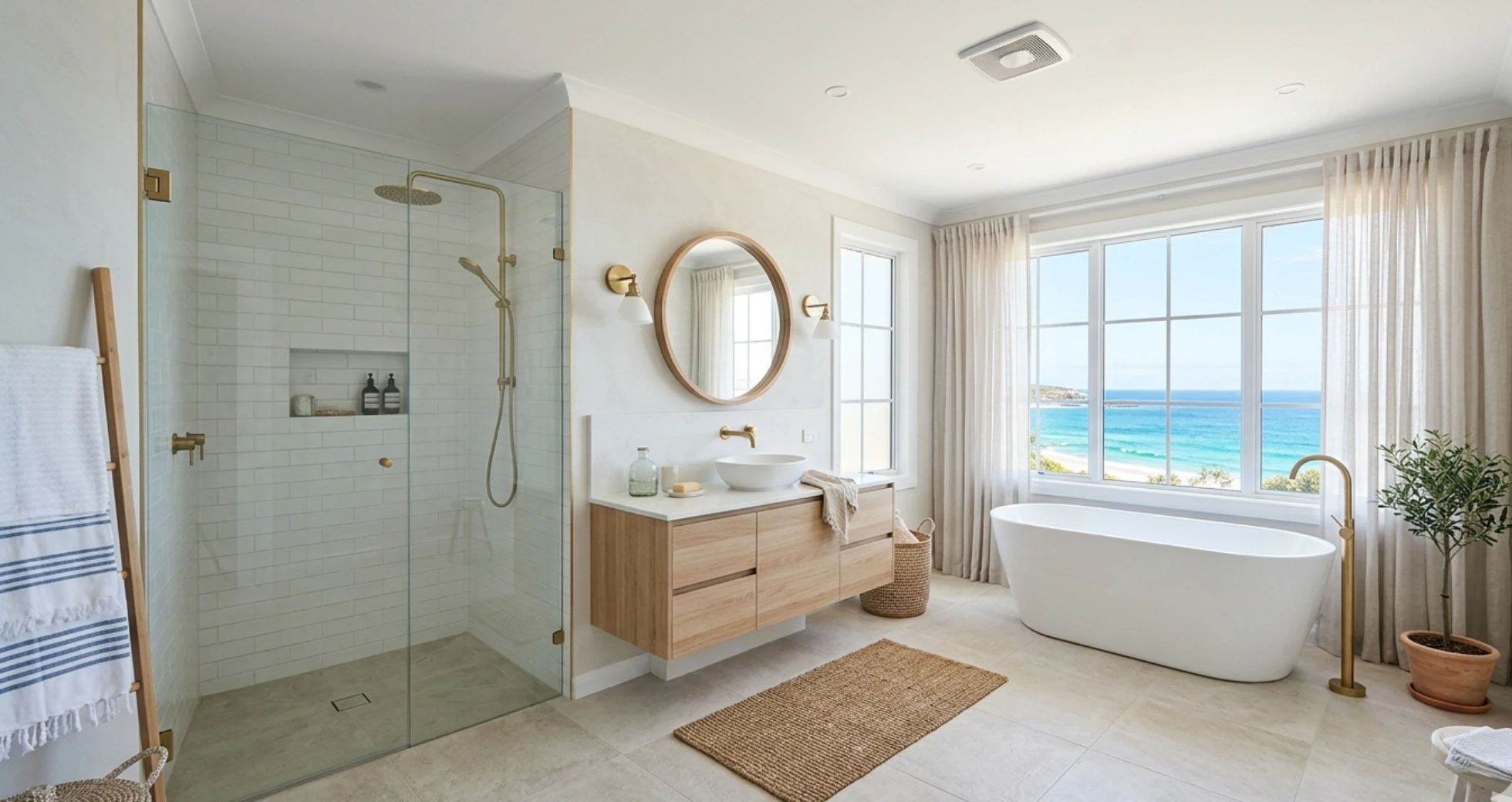
Bathrooms in coastal homes face much harsher conditions than those further inland, so materials and design choices that work in a city apartment often fail quickly by the beach. Salt in the air, strong UV, higher humidity and big temperature swings all speed up wear and tear. Getting the bathroom right means planning for that environment from the start rather than trying to fix problems later.
A well-designed coastal bathroom takes these factors into account from the beginning. Choosing the right products at the planning stage can prevent peeling paint, swollen cabinetry, rusting fittings and persistent mould, which saves money and disruption in the long run.
Salt carried on the sea breeze settles on every surface. In a humid bathroom, this attracts moisture, leading to rapid corrosion. Standard chrome-plated fittings can pit and rust, especially around the shower, so use high-quality stainless steel or solid brass fixtures with marine-grade finishes.
Humidity is also higher and more constant near the ocean. This means timber, MDF and low-grade laminates are more likely to swell, peel or grow mould. For vanities and storage, it is usually better to choose:
Correct ventilation is essential. It means an oversized exhaust fan, ducted to the outside, paired with window openings that encourage cross-ventilation, rather than relying on a small standard fan.
Coastal homes often have larger windows or skylights that bring in light and ocean views. While that is a design advantage, it also introduces stronger UV exposure. UV can fade benchtops and tiles and break down some plastics and sealants. It is important to prioritise UV-stable finishes on cabinetry, grout and silicone and choose benchtop materials that do not yellow or become brittle in strong sunlight.
Bathrooms in beach houses may experience wider temperature shifts as sea breezes cool the room quickly after a hot day. Materials that expand and contract too much can cause cracked grout lines or failed silicone. Selecting flexible grout systems and quality sealants helps the bathroom cope with these movements and stay watertight.
Life usually comes with wet towels, sandy feet and frequent showers. This higher level of day-to-day use can quickly damage delicate finishes. For floors, it is usually better to choose:
Storage also needs to handle damp gear. Ventilated cabinetry, open shelves for baskets and wall hooks designed for wet environments help keep moisture from being trapped inside cupboards where mould can form.
Constant humidity, salty air and daily splashes can quickly damage the wrong finishes. Choosing materials that resist swelling, warping and mould helps reduce maintenance and keeps the bathroom looking better for longer. The right products also protect the underlying structure, not just the visible surfaces.
Moisture resistance is not just about waterproofing the shower. It affects every surface, from wall linings and joinery to benchtops and flooring. The best choices combine water resistance with durability against cleaning products and everyday wear, which is especially important in busy coastal homes and holiday rentals.
For floors, porcelain tiles are usually one of the most practical choices. They have very low porosity, so they absorb little water and cope well with sand and grit tracked in from the beach. Rectified porcelain tiles with minimal grout joints also reduce the amount of grout that needs cleaning and resealing.
On walls and in showers, large-format porcelain or ceramic tiles also perform very well in coastal conditions. Fewer grout lines mean fewer places for moisture to penetrate and less chance of mould growth. Where a seamless look is preferred, acrylic or solid-surface shower wall panels can also work well because they remove grout lines altogether.
Behind these finishes, the right substrates are just as important. Cement sheeting and approved waterproof tile underlay are far more reliable in wet areas than standard plasterboard. Proper waterproof membranes and correct falls to drains complete the system and help extend the life of the finished bathroom.
Bathroom cabinetry in coastal homes needs to cope with constant humidity. Moisture-resistant board finished with high-quality laminates or 2-pack polyurethane is usually a much better choice than standard particleboard, especially around door edges and under-sink areas where swelling often starts.
For benchtops, engineered stone and porcelain slabs are practical options because they are non-porous, resist staining and do not require the regular sealing that many natural stones need. For those who prefer the warmth of timber, it is best used in lower-splash areas only, with durable polyurethane finishes and careful detailing to prevent standing water from collecting around basin cut-outs.
Grout and sealants are often the first components to fail in wet coastal bathrooms. Using epoxy or premium cement-based grouts with mould-resistant additives helps prevent staining and cracking in shower floors and walls. Flexible mould-resistant silicones at junctions between walls, floors and fixtures allow for minor movement without letting water in.
Finally, even the best materials benefit from good ventilation. Pair moisture-resistant finishes with correctly sized exhaust fans and windows that encourage cross-breezes. This combination keeps humidity in check, which protects materials and finishes for the long term in coastal conditions.
In coastal bathrooms, salt in the air and higher humidity can quickly damage taps, showers and hardware that might last for years inland. Fixtures and finishes need to be chosen with corrosion resistance in mind so the bathroom stays looking better for longer and requires fewer replacements.
Choosing the right metals and surface treatments is just as important as selecting tiles or cabinetry. With the right approach, homeowners can still achieve a beautiful look while reducing the risk of pitting, tea staining and peeling finishes that are common in seaside locations.
For tapware, shower heads and accessories, 316 marine-grade stainless steel is often one of the safest long-term choices. It contains molybdenum, which improves resistance to rust and tea staining in salty air. This makes it particularly well suited to items such as towel rails, grab rails, floor wastes and exposed screws.
Where marine-grade stainless is not available, high-quality 304 stainless can still perform well if it is properly polished and cleaned regularly. It is usually best to avoid low-grade stainless steel or products with no clear grade information, as these are more likely to pit and stain quickly near the coast.
For framed screens and some fittings, high-quality aluminium with a thick powder-coated finish can also work well. Aluminium does not rust like mild steel, and a durable coating helps protect the surface from corrosion. It is also important to choose products with stainless steel or brass fixings rather than standard steel screws, which can quickly corrode and stain surrounding surfaces.
Solid brass is another strong option for coastal bathrooms, especially for tapware and handles with a durable plated finish. Compared with cheaper zinc alloys, brass generally holds up better in damp conditions and is less likely to weaken, snap or crumble over time.
Even the best base metal needs the right finish. For coastal homes, these are recommended:
PVD finishes, such as brushed nickel or gunmetal, bond at a molecular level to the metal, providing much better scratch and corrosion resistance than standard painted or cheap plated finishes. This is useful for darker tones that might otherwise show wear quickly.
Chrome on brass remains a classic choice for coastal bathrooms. When specified from reputable brands and cleaned with non-abrasive products, it offers strong protection against pitting and peeling. Budget chrome on mystery base metals is avoided, as it tends to bubble in a salty environment.
Powder-coated aluminium frames for shower screens or window trims should have a marine-grade pre-treatment and be carefully sealed at joints to limit salt intrusion. Light colours show less staining and weathering, which helps the bathroom look fresher for longer.
Small components are often the first to fail near the coast. Better choices include:
Avoiding mild steel fixings and cheap plated accessories can greatly reduce rust streaks on tiles and cabinetry. When in doubt, marine-grade stainless or solid brass with a proven finish is usually the safer long-term choice for visible hardware in coastal bathrooms.
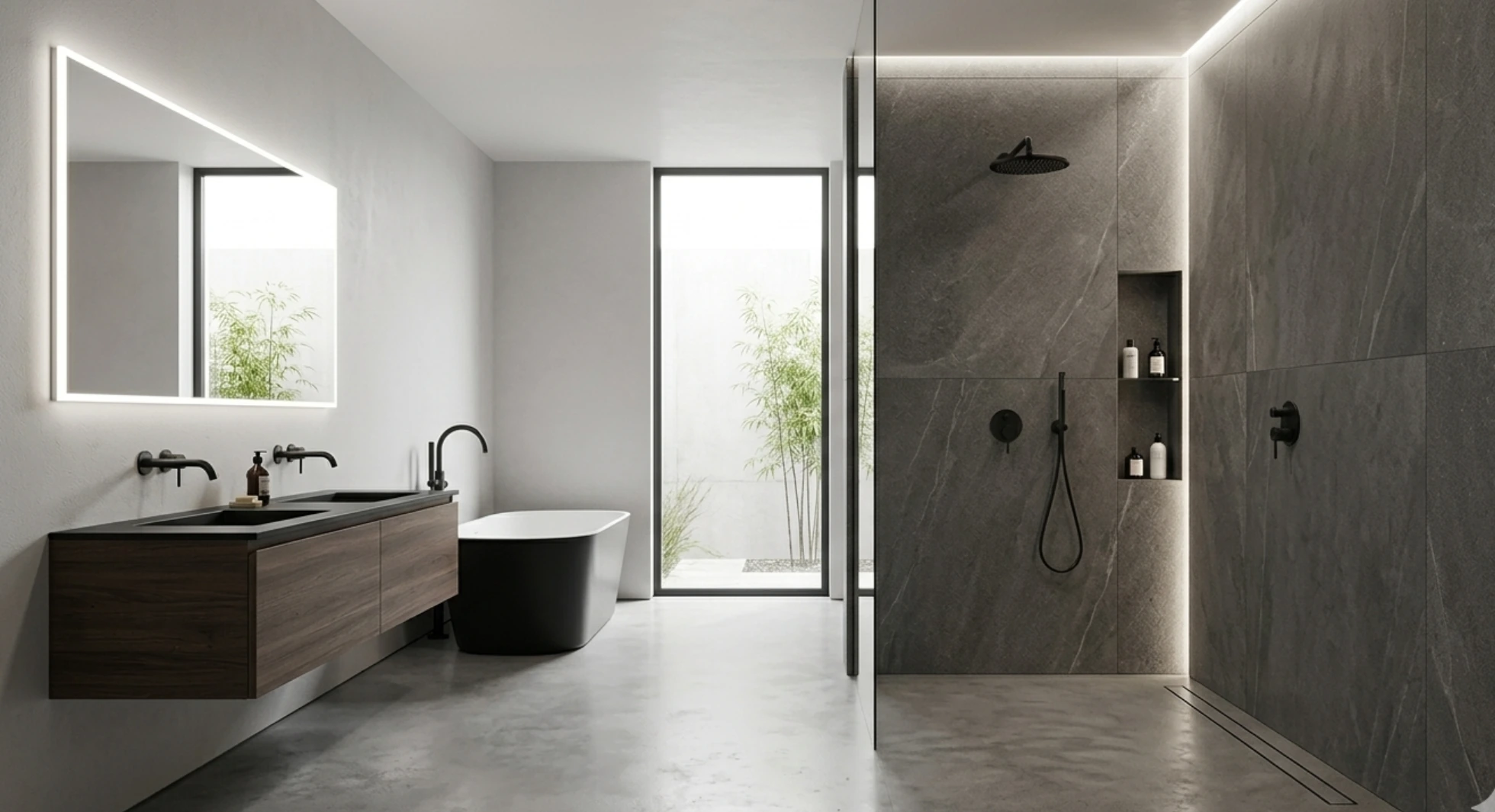
Bathrooms on the Central Coast deal with constant salty air and high moisture, so smart design is just as important as material choice. Thoughtful planning can reduce mould growth, swelling cabinetry and peeling finishes, helping the room stay fresher and lower maintenance for longer. Good airflow, practical layout decisions and targeted waterproofing all help a bathroom cope better with daily steam and coastal humidity.
Bathroom layouts should allow water to drain quickly and surfaces to dry between uses. Important details include:
Walk-in showers with a single fixed glass panel often perform better in coastal settings than enclosed cubicles because air can circulate more freely and surfaces dry faster. Open niches instead of bulky corner shelves can also reduce water traps and make silicone joints easier to keep clean.
In humid coastal air, cold surfaces attract condensation, which can damage paint and encourage mould. A few smart design choices can help reduce this problem.
Frameless or semi-frameless shower screens use less metal, so there are fewer cold edges for moisture to collect on. On exterior walls, insulation behind bathroom walls and ceilings helps keep internal surfaces closer to room temperature, which can reduce condensation on plasterboard and painted finishes.
Well-placed heated towel rails do more than warm towels. By drying them more quickly, they remove a major source of moisture from the room. In larger bathrooms, underfloor heating beneath tiles can also help by keeping floor surfaces warmer and reducing lingering dampness.
Designing a bathroom for a coastal home is not just about the right look. The harsh mix of salt air, humidity and strong light along the Central Coast means some materials and design choices deteriorate very quickly. Knowing what to avoid helps homeowners invest in finishes that will last and stay looking fresh.
It is worth steering clear of products that rust, swell, peel or trap moisture. Many common bathroom inclusions that perform well inland can fail fast in a beachside environment.
A beautiful bathroom will not stay that way if steam cannot escape. Excess moisture leads to mould on ceilings, grout and cabinetry.
Design issues to avoid include:
Coastal bathrooms should feel calm, light and easy to live with. Some finishes may look impressive at first but become impractical or dated.
Designers caution against:
Creating a bathroom that truly suits a coastal home is about far more than embracing a beach-inspired aesthetic; it’s about making smart, long-lasting choices in materials, layout and design details that stand up to everyday life. From selecting moisture-resistant surfaces, durable joinery and non‑slip flooring to planning practical storage, good ventilation and efficient lighting, every decision plays a part in how well a bathroom performs. The right combination of colours, textures and finishes can capture that relaxed coastal feel, but it’s the quality of the products, the way they’re installed and the care taken with waterproofing and ventilation that will keep the space looking good and functioning smoothly for years. With thoughtful planning, a clear understanding of how the bathroom will be used and a focus on materials and design ideas, it’s possible to create a bathroom that feels calm, light-filled and inviting.