What to Consider Before Finalising Your Kitchen Renovation Design
June 5, 2026


Planning a new kitchen involves more than selecting colours, finishes and appliances. The decisions made before approving the final design will influence how efficiently the space functions, how comfortable it feels to use each day and how well it performs over time. For homeowners considering kitchen renovations on the Central Coast, careful planning can help prevent costly changes, design compromises and everyday frustrations.
Drawing on the practical design principles used by Central Coast Kitchens & Bathrooms, this guide explains the questions worth asking before signing off on a kitchen renovation. From workflow and storage to appliance placement and lighting, each detail contributes to a kitchen that is functional, durable and suited to the household using it.
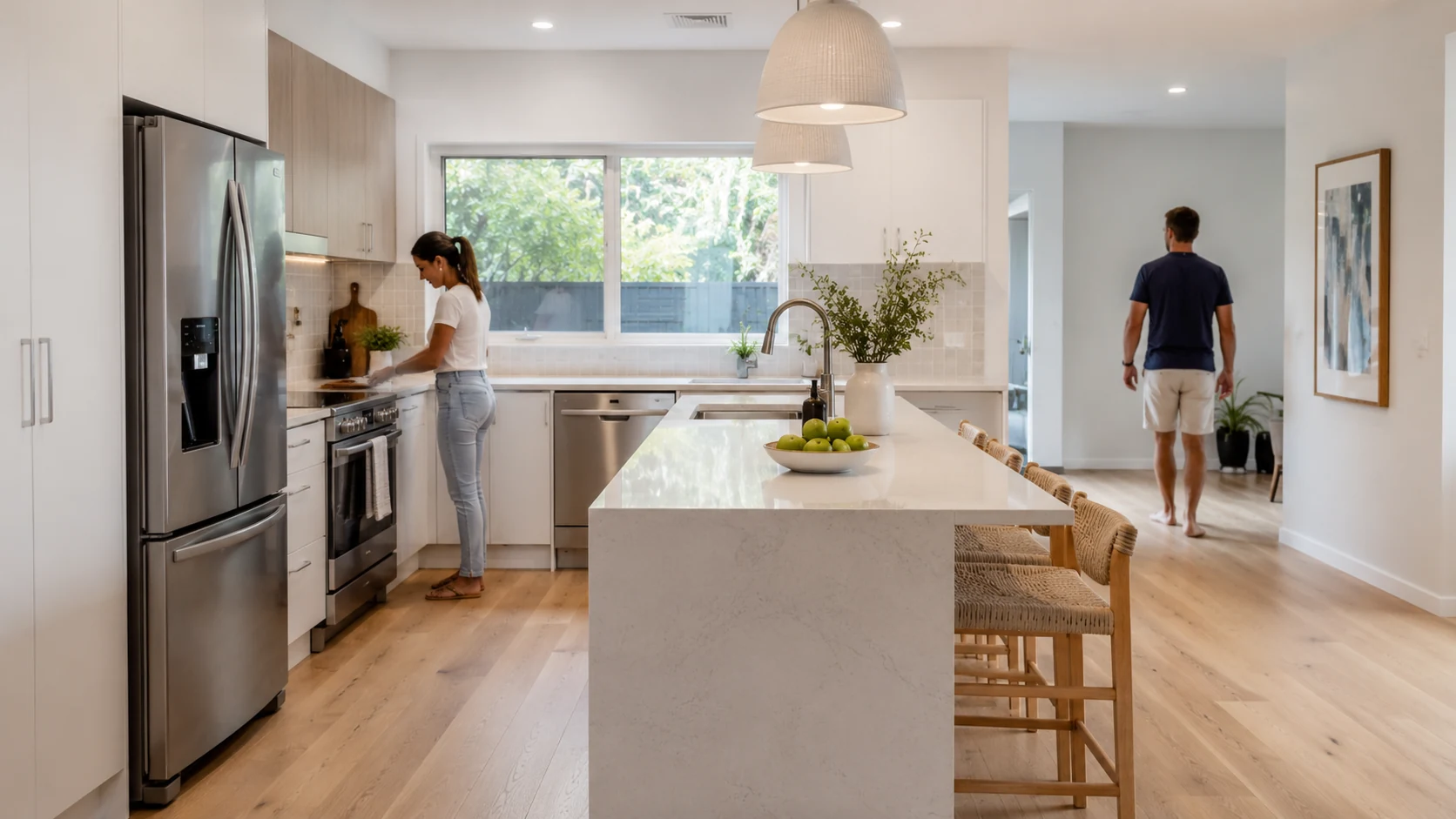
Daily habits should guide every kitchen design decision. Even an attractive layout can become frustrating if it does not support the way the household prepares meals, stores food, cleans up and entertains guests.
Before finalising the design, picture a normal week in the home. Consider who uses the kitchen, how often meals are prepared and whether the space needs to accommodate children, visitors or multiple cooks. A family that cooks most nights will have different requirements from a household that relies on quick meals or takeaway.
Frequent home cooks generally benefit from generous bench space close to the cooktop and sink. This provides room for food preparation, serving and cleanup without requiring constant movement across the kitchen. Occasional cooks may prioritise a simpler layout with easy-to-clean surfaces and enough storage to keep benches clear.
The traditional work triangle between the fridge, cooktop and sink is still a useful starting point, but it should not be treated as the only design rule. In compact kitchens, a small triangle can create an efficient workflow. In larger kitchens, defined zones for preparation, cooking, cleaning and food storage may work better by reducing unnecessary steps.
A kitchen used by one person at a time can function well with a more compact layout. A kitchen where several people cook, clean or move through the space needs more generous walkways and carefully positioned work areas.
Consider whether children will help prepare meals, complete homework at an island or pass through the kitchen to reach an outdoor area. An island or peninsula can create a useful shared space, provided it does not interrupt the main cooking zone.
For households that entertain regularly, positioning the fridge, drinks storage or a small serving area near the edge of the kitchen can allow guests to help themselves without getting in the way of the cook.
The amount of cooking and cleaning completed each day should also influence the finishes selected. Busy households may benefit from hard-wearing benchtops, easy-to-clean splashbacks and flooring that can cope with spills and regular foot traffic.
Open shelving can add character, but it also collects dust and grease more easily than enclosed cabinetry. In kitchens that are used heavily, a combination of enclosed storage and a small number of display shelves is often more practical.
A functional kitchen should allow people to prepare meals, open appliances and move through the room without feeling cramped. Before approving the design, check that the layout provides enough clearance around benches, islands, doorways and major appliances.
It is also worth considering how the kitchen connects with adjoining dining, living and outdoor areas. A walkway that appears generous on a floor plan may feel restricted once stools, appliance doors and open drawers are taken into account.
Walkways between benches or around an island should be wide enough for the way the kitchen will be used. Where several people regularly cook or pass through the room, there should be enough space for one person to work while another moves behind them comfortably.
High-traffic routes should not cut through the main cooking area where hot trays, sharp utensils or open appliance doors may create hazards. Where possible, direct foot traffic around the edge of the kitchen rather than through the primary preparation zone.
Clear bench space beside major appliances makes the kitchen safer and easier to use. Allow a practical landing area beside the fridge for unpacking groceries, beside the oven for hot trays and on both sides of the cooktop for ingredients and utensils.
The sink also needs usable bench space nearby for preparing food, stacking dishes and allowing items to drain. A large sink placed in the middle of a short benchtop can reduce valuable preparation space, so its size and location should be considered carefully.
Appliance doors, cupboard doors and drawers should not compete for the same space. Check that the fridge, oven and dishwasher can open fully without blocking important walkways or preventing access to nearby storage.
The dishwasher should not block access to the sink or rubbish bin when open. Pantry doors should not swing into a narrow walkway. In compact kitchens, sliding or bifold pantry doors may help preserve circulation.
Storage is not simply about fitting as many cupboards as possible into the room. A well-designed kitchen places frequently used items close to where they are needed and reduces the amount of bending, reaching and rummaging required during everyday tasks.
Before approving the cabinetry layout, think about what is currently stored in the kitchen and what tends to be left on the benchtop. Appliances, cookware and pantry items that do not have a planned home can quickly create clutter in the finished space.
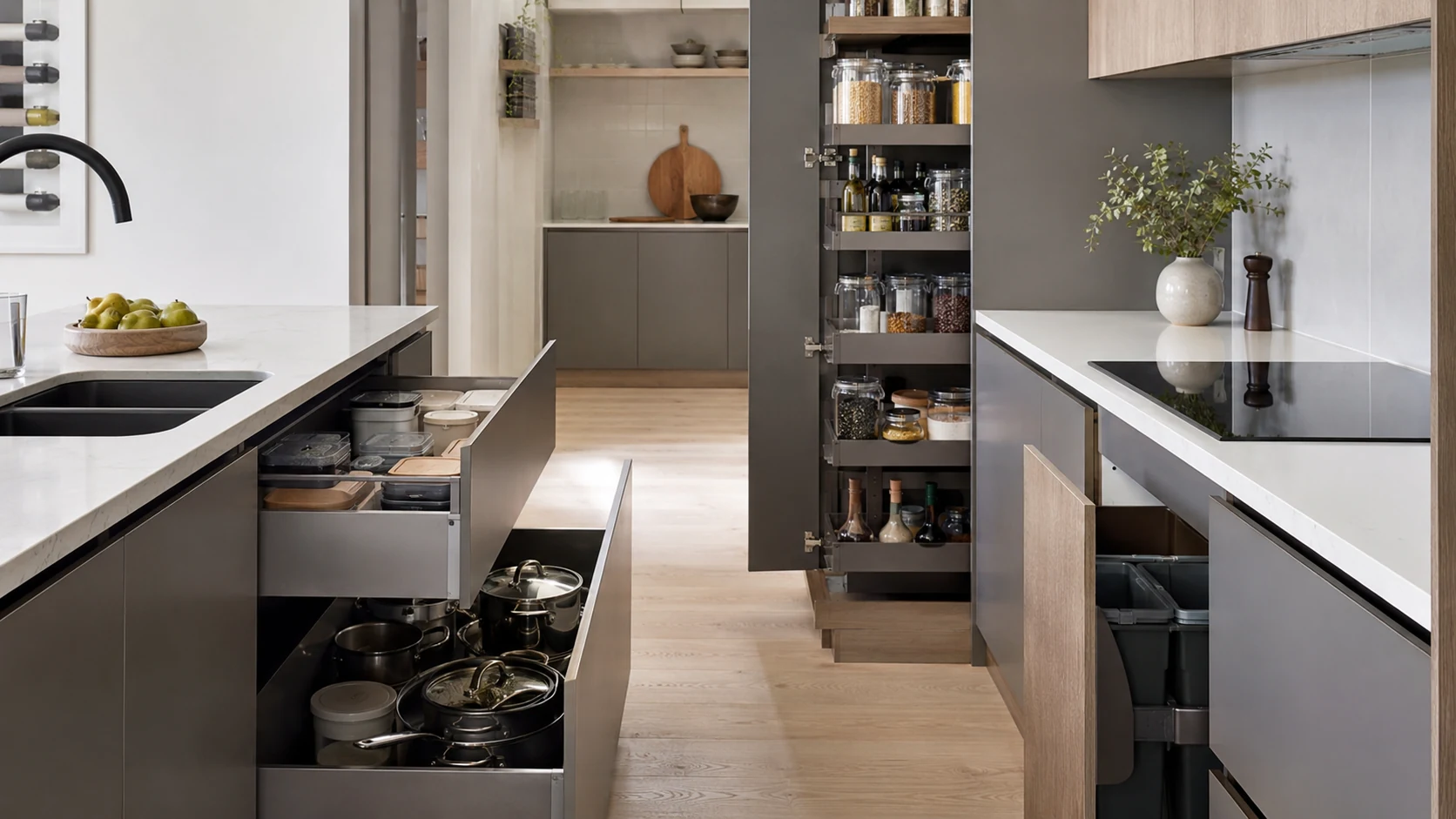
Frequently used plates, glasses, cookware and pantry staples should generally be stored between knee and shoulder height. Deep drawers and pull-out storage can provide easier access than standard base cupboards, particularly for pots, pans, food containers and small appliances.
Tall pantry units with adjustable shelves or internal drawers can make effective use of vertical space without creating inaccessible storage zones. Overhead cupboards should provide useful storage without sitting so low or extending so far forward that they crowd the benchtop.
Mixers, air fryers, slow cookers, coffee machines and large platters need designated storage. If these items are not considered during the design stage, they often remain permanently on the benchtop.
An appliance cupboard or pantry zone can keep frequently used items accessible while reducing visual clutter. Power points can also be included inside selected cupboards where appropriate, allowing some appliances to be used without being moved each time.
Bin storage is easy to overlook, but it has a significant effect on how smoothly the kitchen functions. Rubbish, recycling and food-waste bins should be easy to access from the sink and food-preparation area without obstructing the dishwasher or a main walkway.
A pull-out bin drawer can keep waste concealed while making cleanup easier. The size of the system should reflect the household’s needs rather than being treated as an afterthought.
A practical kitchen should remain comfortable to use over time. Deep drawers, reachable shelving, clear walkways and easy-to-operate handles can make everyday tasks simpler for people of different ages and abilities.
Planning these details from the start can improve comfort without changing the overall appearance of the kitchen.
Appliances, plumbing fixtures and essential services need to be confirmed early so the cabinetry, electrical work, plumbing and ventilation all align. Late changes to appliance sizes or service locations can add cost, delay the project and affect the final layout.
Anything that requires power, water, gas or ventilation should be considered before cabinetry is ordered or walls are closed.
Large appliances dictate much of the kitchen layout, so their dimensions and installation requirements should be confirmed early. This includes the cooktop, oven or freestanding cooker, rangehood, fridge, dishwasher and microwave.
Each appliance requires specific allowances. For example:
When comparing fridges, dishwashers and other appliances, homeowners can also review the Australian Government guide Understand the Energy Rating Label to compare energy efficiency alongside size and installation requirements.
Rangehood selection also needs early consideration. A ducted rangehood requires a planned route to the exterior, while a recirculating model filters the air and releases it back into the room. Where practical, ducting to the exterior generally provides more effective removal of cooking moisture and odours.
The position of the sink determines the location of waste pipes and hot and cold water lines. It also often affects where the dishwasher can be installed.
Decisions to make early include:
Dishwashers, fridges with plumbed water dispensers and boiling or chilled water systems also require correctly positioned services. If the design includes a butler’s pantry or secondary sink, water and waste routes need to be mapped from the start.
Electrical planning involves more than deciding how many power points to install. The total appliance load and any dedicated circuit requirements should be considered before construction begins.
Power points may be needed:
The location of power points should be practical without creating visible clutter. Electrical requirements for the cooktop, oven, rangehood and other fixed appliances should also be documented clearly.
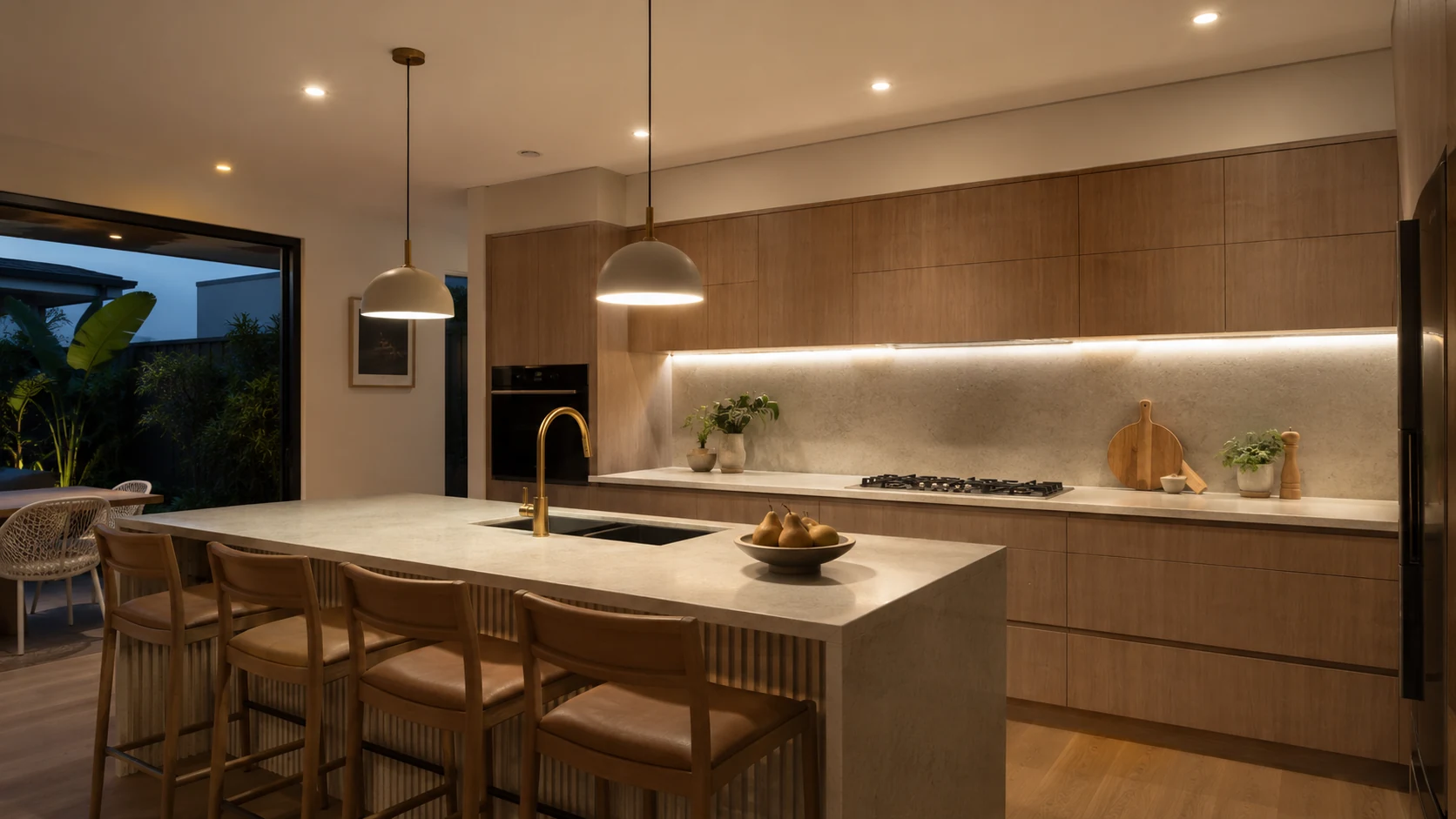
Lighting and materials affect how the kitchen looks, feels and performs each day. The right combination can reduce shadows, simplify cleaning and help the room remain comfortable and practical over time.
In many Central Coast homes, finishes may also need to cope with humidity, strong natural light and regular foot traffic. Material choices should reflect the household’s daily habits as well as the overall style of the home.
A single central light rarely provides enough clarity for cooking, cleaning and food preparation. A layered lighting plan generally works better.
Task lighting should come first. Under-cabinet LED strips or bars can reduce shadows across benchtops. Positioning them towards the front of the cabinet underside helps direct light onto the work surface rather than the splashback.
Pendant lights above an island can provide useful lighting and help define the space. They should sit high enough to avoid obstructing views or creating glare when people are seated.
Ambient lighting fills the rest of the room. Recessed downlights are commonly used in kitchens, but they should be positioned carefully to avoid dark patches and shadows over work areas.
Accent lighting can then be added selectively. LED strips inside open shelves or along a kickboard can create a soft glow and make the kitchen more comfortable to use at night. Dimmers are worth considering so the brightness can be adjusted for cooking, entertaining or late-night use.
Natural light should also be assessed. Strong sunlight can create glare on glossy finishes, particularly in bright kitchens. Matte, satin or textured surfaces may provide a more comfortable result in these spaces.
Benchtops need to handle spills, heat, food preparation and regular cleaning. Porcelain and sintered stone surfaces are practical options for busy kitchens because they are durable, low maintenance and available in a wide range of finishes.
Quality laminate and solid surface materials can also provide a practical result at different price points. Natural stone remains an option for homeowners who prefer its individual appearance, although the care requirements vary depending on the material selected.
The best choice depends on the household’s budget, style preferences and willingness to maintain the surface over time.
Cabinetry finishes should balance appearance with durability. Satin or matte polyurethane finishes often show fewer fingerprints and reflections than high-gloss cabinetry, particularly in darker colours.
Modern laminates are also available in a wide range of timber-look and stone-look finishes. They can provide a practical, easy-to-maintain alternative to natural timber in busy kitchens.
Cabinet carcasses should be made from materials suited to kitchen conditions, with appropriate sealing around vulnerable edges. This is especially important near sinks, dishwashers and other areas exposed to moisture.
Splashbacks should be selected with cleaning in mind. Large-format tiles and glass panels reduce the number of grout lines where grease can accumulate. Highly textured tiles can add interest, but they generally require more maintenance and may be better suited to limited feature areas.
Flooring should cope with spills, regular cleaning and foot traffic. Porcelain tiles with a subtle texture can provide a durable and slip-resistant option. Hybrid and quality vinyl planks can also suit homeowners who prefer a timber-look finish with lower maintenance requirements.
Materials, colours and lighting should be considered together rather than selected in isolation. Glossy cabinetry, reflective benchtops and bright lighting can sometimes create unwanted glare.
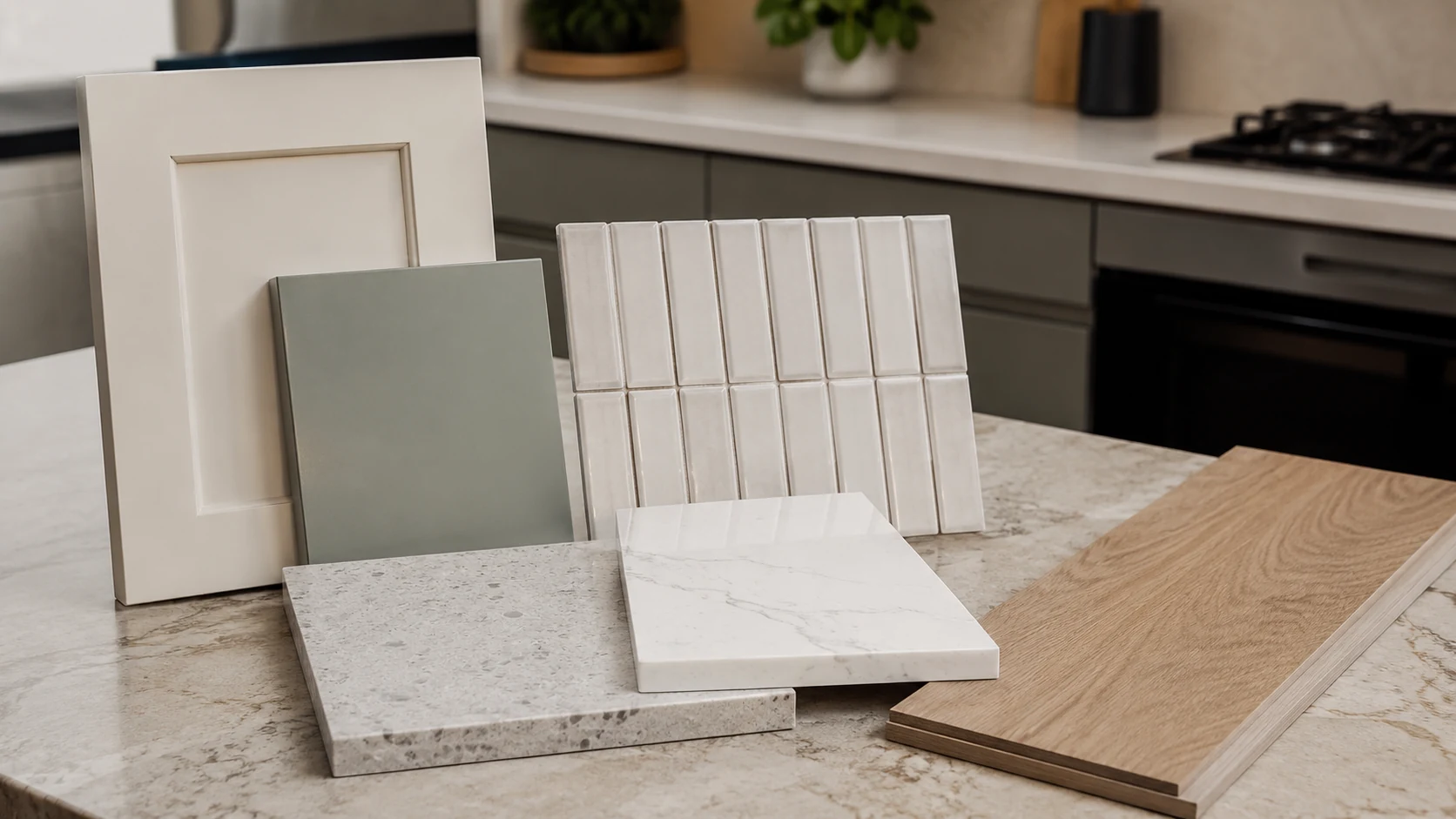
View sample boards in the kitchen area at different times of day. Place benchtop, cabinetry and splashback samples together under both natural light and the proposed artificial lighting. This helps reveal whether colours appear too warm, too cool or noticeably different from showroom samples.
Kitchen renovation budgets are rarely unlimited, so it is important to direct spending towards features that improve daily use, durability and long-term value. A clear priority list can prevent decorative upgrades from consuming funds needed for more practical elements.
The layout has the greatest effect on how the kitchen performs. If the existing arrangement creates poor workflow, limited storage or restricted movement, it may be worth allocating part of the budget to repositioning appliances or services.
Plumbing and electrical changes can increase the renovation cost, but correcting an impractical layout is often more valuable than spending heavily on decorative finishes while retaining the same frustrations.
Storage hardware, drawers, hinges and benchtop surfaces are used every day. These features generally deserve priority over purely cosmetic extras.
Deep drawers, practical pantry storage and quality hardware can improve access and help cabinetry perform reliably over time. Where the budget is limited, a simple cabinet profile with durable fittings may provide better value than an elaborate finish paired with lower-quality hardware.
Create a list of essential features, preferred upgrades and optional additions before approving the design. Essential items may include practical storage, suitable lighting, reliable appliances and durable materials. Decorative lighting, feature shelving and premium accessories can then be assessed against the remaining budget.
This approach makes it easier to protect the core functionality of the kitchen if costs need to be adjusted.
A detailed quote should clearly identify what is included and excluded. Depending on the project, this may cover demolition, waste removal, cabinetry installation, benchtops, splashbacks, flooring, plumbing, electrical work, painting and appliance installation.
Clarifying these details before work begins reduces the likelihood of unexpected costs and helps homeowners compare quotes more accurately.
Before signing off on a kitchen renovation, every major detail should be clear, accurate and documented. This is the stage where the layout, materials and services are locked in, so unresolved questions can lead to delays, additional costs or compromises during construction.
Review the plans systematically, starting with the overall layout and then moving through storage, appliances, services, finishes and quote inclusions.
Before approving the design, confirm that:
Finalising a kitchen design requires more than approving colours and finishes. The most successful kitchens are shaped by careful decisions about layout, storage, workflow, lighting, materials and appliance integration before construction begins.
Taking the time to review these details can help ensure the finished kitchen is practical, comfortable and suited to the demands of everyday life. With a clear design and a well-planned renovation process, homeowners can move forward with greater confidence in the final result.