Can I Renovate My Only Bathroom While Living at Home?
November 24, 2026


You may be comfortable putting up with renovation noise and dust, but losing access to your only toilet or shower is a different matter. Staying at home during a bathroom renovation can be practical if you have reliable alternatives, but without them, even a straightforward project can make everyday routines difficult. Central Coast Kitchens & Bathrooms can assist homeowners in planning their renovations, including the practical considerations that come with temporarily losing bathroom facilities.
The important question is not simply how long the renovation will take. You also need to know when each facility will become unavailable, what you can use instead and when the renovation team confirms the new fixtures are ready. For your Central Coast household, understanding these details will help you decide whether to stay, temporarily move out or combine both approaches.
Your toilet and shower may stop being available at different points, and they may not return to use together. A bathroom renovation needs an access plan that accounts for each fixture separately rather than treating the room as either completely open or closed.
Before work starts, ask your renovation team to explain the expected periods without a toilet, shower and handwashing basin. Knowing these details will help you organise alternative facilities before construction begins.
Access can end as demolition begins, when plumbing is disconnected or when the bathroom becomes an active work zone. A toilet might still be physically present while other work starts, but that does not mean you can safely enter and use it. The renovation team needs to confirm that it functions and that access is permitted.
The shower has its own restrictions. Once its surfaces, drainage connections or waterproofing are being worked on, you should not assume it remains available because the shower fitting is still attached. Ask specifically when showering must stop and what needs to happen before it can resume.
Handwashing also deserves attention. A temporary toilet arrangement does not solve the whole problem if there is no suitable way to wash your hands afterwards. Establish which facilities remain available elsewhere in the home and whether the planned work affects them. Reliable access to soap and running water is important for washing your hands after using the toilet, including when you are relying on temporary facilities.
For more information about the decisions involved, these bathroom renovation considerations can help you prepare questions for your renovation team.
A room can look nearly finished before it is ready for everyday use. Fixtures may be positioned but not connected, plumbing connections may still need testing and installed materials may need time to cure before exposure to water. Visible progress does not automatically mean the bathroom is ready.
Avoid planning around assumptions such as showering as soon as the tiles are finished or using the toilet whenever the trades have left. Ask for explicit confirmation of which fixtures are usable and whether the route to them is clear and safe.
When researching bathrooms in Central Coast, ask experts how they communicate changes to bathroom access. A useful answer should distinguish between an estimated completion date and confirmed permission to use each fixture. Any plumbing disconnection or reconnection must be handled by a licensed professional in line with plumbing licensing requirements in NSW, rather than improvised to bridge a gap in household access.
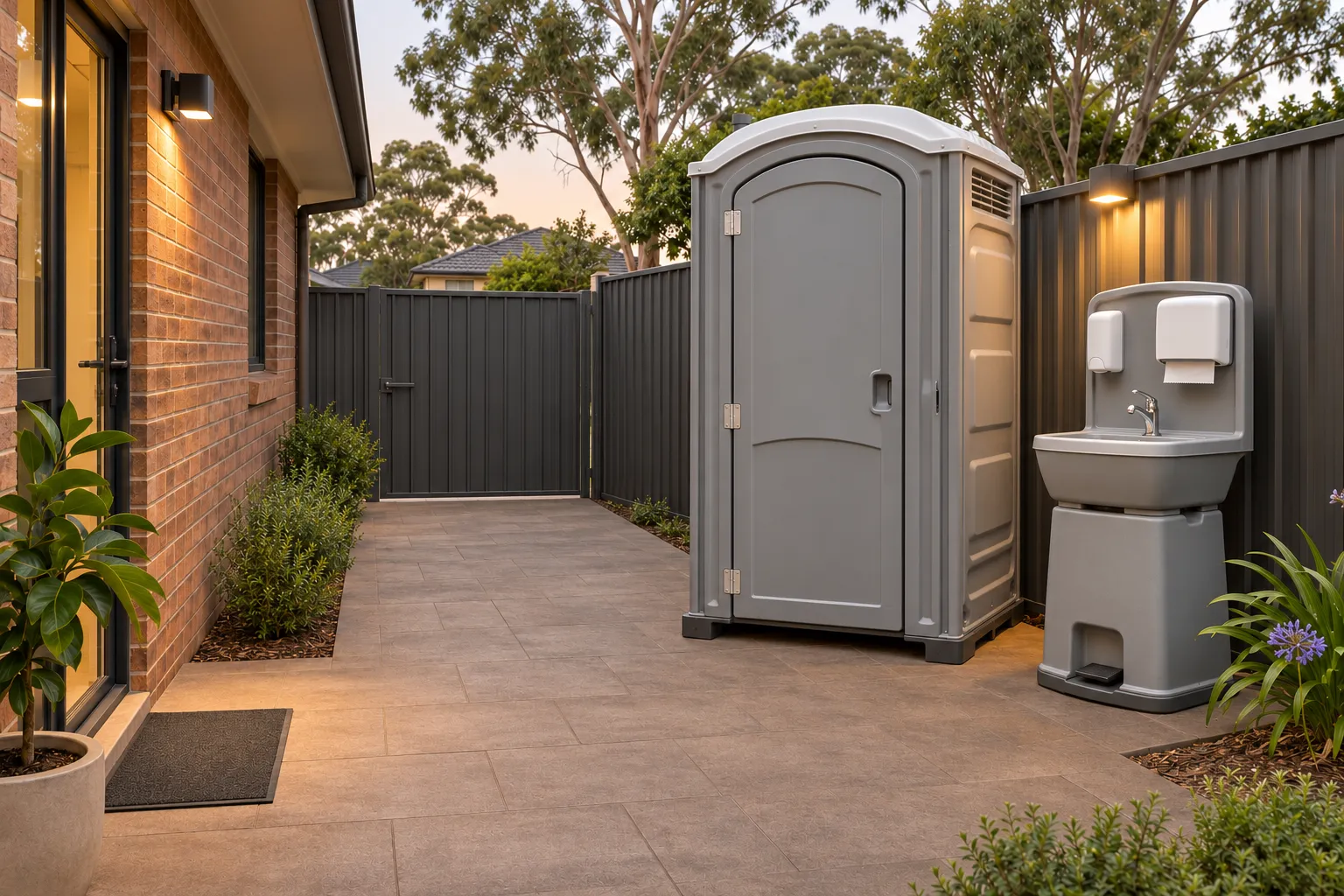
Temporary bathroom facilities are only useful if you can realistically rely on them throughout the renovation. An arrangement that works for an occasional shower may be completely unsuitable for an urgent toilet visit at night.
Consider how your temporary arrangements would work during a normal day and an unexpected overnight toilet visit. Think about who needs access, how they will get there and what happens if the arrangement unexpectedly falls through.
You might be able to shower at a relative's home while continuing to sleep at your own property. However, this does not resolve the need for a toilet between visits. Equally, access to a temporary toilet does not provide somewhere to shower, dry yourself or manage children's bathing routines.
Staying with family can address both needs, provided everyone has agreed on the practical details. Consider bathroom sharing, early starts, evening routines and how long your hosts can comfortably accommodate you. A clear arrangement is more dependable than a vague offer to drop in whenever needed.
Nearby accommodation is another option, either for the entire period without facilities or for the most disruptive part of the renovation. Check whether it provides suitable bathroom access for every household member and whether travelling between the accommodation, home and daily commitments is manageable.
Imagine using your proposed arrangement in the dark or during heavy rain. Would you need to leave the house, cross an exposed area or drive somewhere? Would a child need an adult to accompany them every time? These details often determine whether living at home during renovation is manageable.
Privacy matters too. You need somewhere appropriate to change, keep clothes dry and manage personal care without moving through an active work area. If anyone uses a mobility aid, check the actual access route and suitability of the facilities rather than relying on descriptions such as easy access.
Include temporary facilities or accommodation in your renovation budget from the outset. The broader cost considerations for a coastal bathroom renovation provide useful context, but your living arrangements need their own allowance. Ask about minimum booking periods, servicing arrangements and extension costs before committing, so an access delay does not leave you searching for alternatives at short notice.
Staged work sometimes preserves access to part of a bathroom, but it depends on what is changing and how the room is configured. It is not a dependable solution for every renovation, particularly a full strip-out.
Renovation experts should assess whether the proposed work can be safely separated into stages. Keeping a fixture available should never be assumed simply because it stays in the same position in the finished design.
A limited change in one part of a bathroom may leave other facilities unaffected. For example, replacing a vanity might be easier to separate from the rest of the room than removing the shower, toilet, flooring and wall finishes. Even then, the renovation team needs to assess whether the work can be isolated and whether household access remains safe.
A full renovation is different. Removing finishes, replacing fixtures and undertaking waterproofing can affect much of the room at once. In a compact bathroom, the toilet, shower and basin may all sit within the area needed for preparation and construction. There may be no practical boundary between a usable section and the work zone.
Room configuration matters as much as size. A toilet near the doorway is not automatically accessible if materials, tools or unfinished surfaces occupy the approach. Likewise, retaining a shower is not useful if reaching it requires crossing an area that must remain undisturbed.
A retained fixture may obstruct access to surfaces that need preparation or waterproofing. It can also limit working space, complicate the order of trades or require additional handling. The result may be a more complicated renovation without dependable bathroom access in return.
Daily toilet reconnection should not be treated as a standard option. Whether temporary reconnection is feasible is a matter for the licensed plumber and renovation team, and it may not suit the project scope or property. Similarly, shower use during construction should never be assumed acceptable because some fittings remain in place.
When comparing renovation proposals, know if a suggested staging arrangement changes the cost, sequence or expected disruption. Also learn what could cause the arrangement to become unworkable once construction begins. Discovering hidden issues may change which fixtures can safely remain in use.
Treat uncertain access promises as something to clarify before accepting a quote. Among the bathroom renovation mistakes worth avoiding, relying on an unconfirmed household workaround can create unnecessary pressure once the room is out of service.
Moving out temporarily is not always necessary, but it can be more practical than managing unreliable bathroom access. The decision comes down to weighing the inconvenience of leaving home against the effort of organising every toilet visit and shower around construction.
Your household's routines matter more than someone else's tolerance for renovation disruption. An arrangement that works for one adult may be unsuitable for a family, a retiree with limited mobility or anyone who needs frequent overnight access.
Young children may need help with toileting, bathing and getting ready for bed. A plan that involves travelling elsewhere each evening can become difficult when dinner runs late or a child wakes during the night. Check if your temporary arrangements support these less predictable moments, not just scheduled bath time.
For retirees and others who prefer familiar surroundings, remaining at home may initially seem like the easier choice. However, an unfamiliar temporary facility outside the house may be less convenient than a suitable bathroom at nearby accommodation or a family member's home. Assess actual access needs without assuming age alone determines the answer.
Bathroom access is only part of the decision to stay home. See how the work area will be separated from occupied rooms and how household members will be kept away from demolition, tools and unfinished surfaces. Dust controls and housekeeping arrangements should be discussed, but they do not make an active work zone suitable for household use.
Agree on usable-access milestones rather than relying only on the date the entire project is expected to finish. You may be able to return home before minor finishing tasks are complete, but only once the necessary facilities and access routes have been confirmed ready.
Learn how and when the team will notify you that the toilet is available, the shower is ready and the room can be used normally. These may be separate confirmations. Also establish who will communicate any changes so you are not making accommodation decisions based on informal comments on site.
Where possible, choose living arrangements that can be extended. Before booking accommodation or agreeing to stay with family, find out what flexibility exists if access is delayed. Keep the alternative available until usable facilities are confirmed rather than cancelling it because the bathroom looks almost finished.
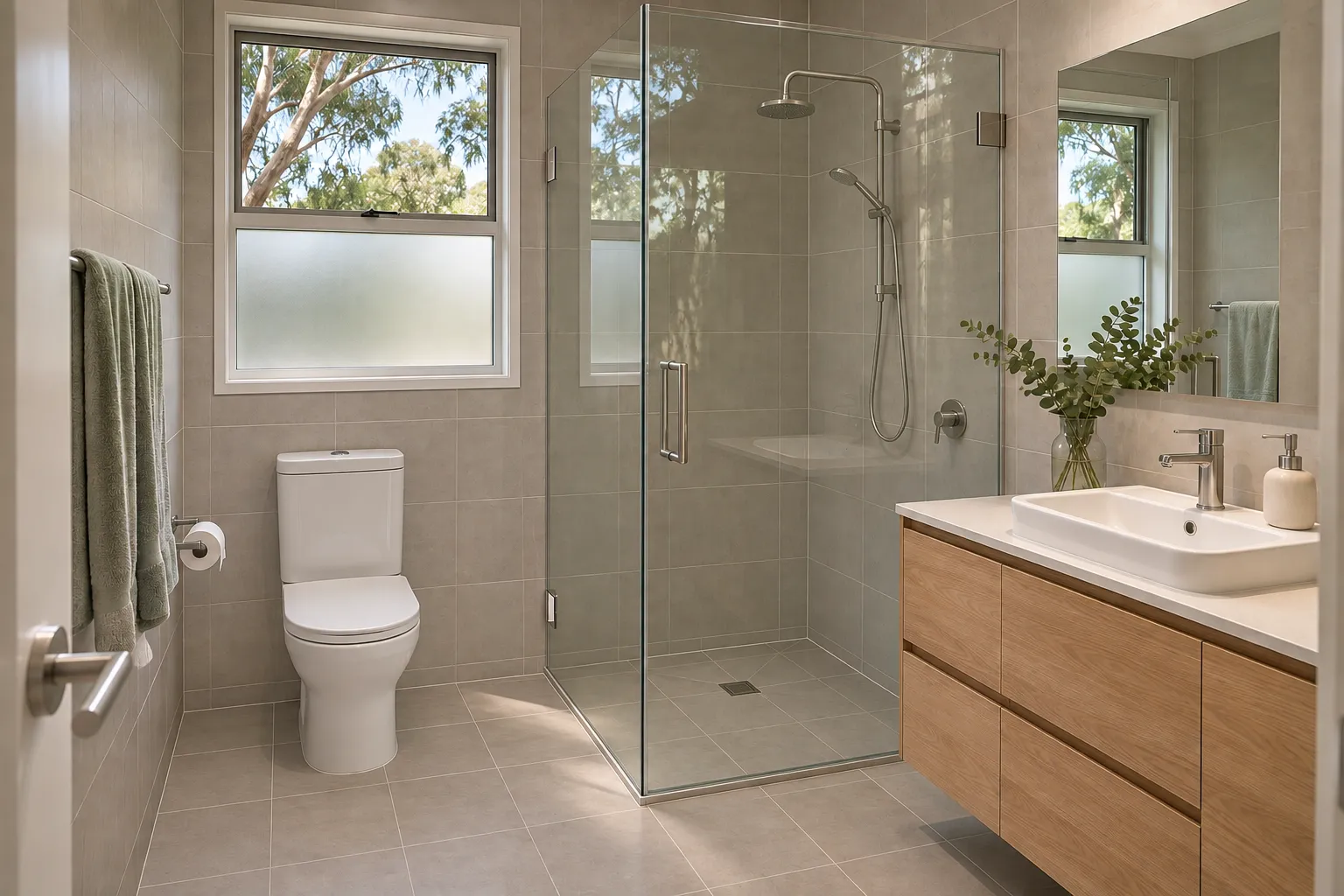
Renovating your only bathroom does not necessarily mean moving out, but you need a reliable plan for the time when essential facilities are unavailable. Consider your household's routines, alternative toilet and shower arrangements, and the possibility of construction delays before deciding whether to stay home or temporarily relocate.
Central Coast Kitchens & Bathrooms can plan a bathroom renovation that considers both the finished space and the practicalities of the work involved. With clear communication and realistic expectations about bathroom access, you can prepare your household for construction and make the renovation process more manageable.